
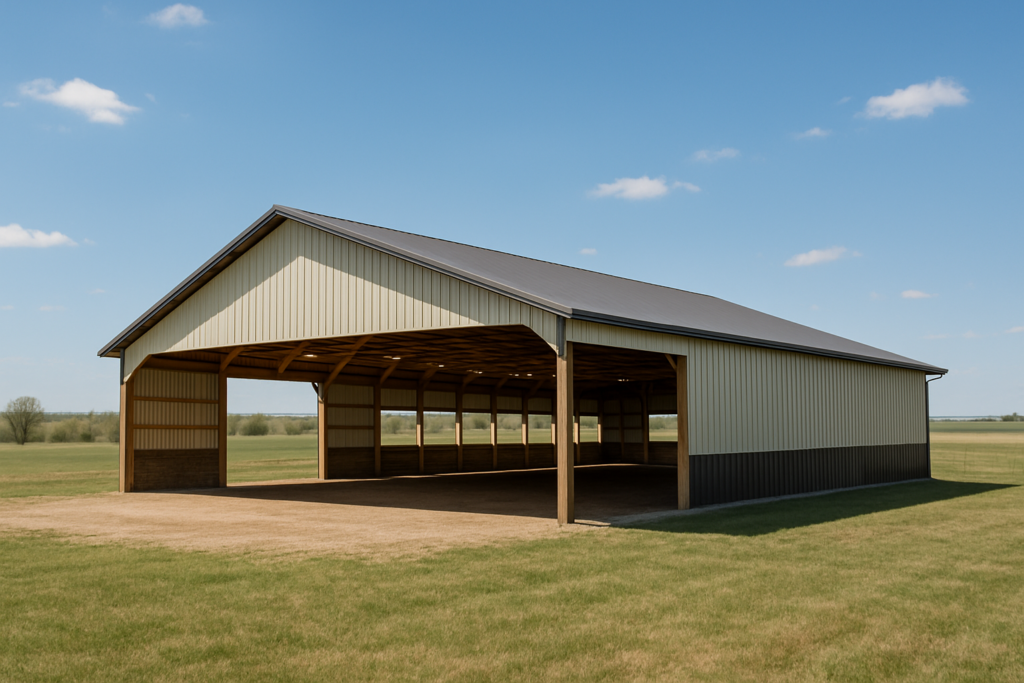
Designing an equestrian arena pole barn in Kansas requires careful planning around both your riding needs and our unpredictable weather. Whether you’re building a private training facility in the Flint Hills or a small arena near Manhattan, the right layout can mean the difference between a structure that serves you for decades and one that demands constant repairs.
At K-Construction, we’ve worked with horse owners across central Kansas—from Riley County to Geary County—to design arenas that handle our humidity, wind, and seasonal extremes while giving riders the safe, functional space they deserve.
Foundation and Footing: Your Arena’s First Line of Defense
Kansas soil can shift with moisture and freeze-thaw cycles, so a solid foundation is essential for your arena. Most equestrian facilities use a concrete perimeter with engineered footing in the riding surface—this combination gives horses good traction and reduces strain on their joints.
A properly engineered footing with good drainage keeps your arena usable year-round.
Arena Dimensions and Ceiling Height
A standard equestrian arena pole barn runs 80 feet long by 120 feet wide—about the size of a dressage court plus room for warm-up. If you’re jumping or doing longer work, 100 x 150 feet gives you more freedom without overbuilding.
For ceiling height, 16–18 feet is the sweet spot. Fourteen feet feels cramped when you’re riding under saddle, but anything over 20 feet makes heating and cooling harder during those cold Kansas winters. Post-frame construction lets you span that clear space without interior posts, so you never have to work around obstacles.
One feature we often recommend: a higher truss system at one end (around 20 feet) if you plan to jump. Gives you that safety margin without adding weight across the whole structure.
Ventilation: Keeping Your Horses Healthy
Poor ventilation in an equestrian arena pole barn creates respiratory problems. Dust, ammonia from hay and bedding, and moisture hang in stale air. In our humid Kansas summers, moisture gets trapped unless you design for air movement.
Ridge vents and soffit vents should run the full length of your roof. If your arena faces prevailing winds (typically from the south and southwest in central Kansas), position larger openings to capture that breeze naturally. Many riders add fans mounted inside for weeks when the air is still.
Avoid fully sealing your arena. The goal is controlled ventilation—enough air movement to keep dust and ammonia low, but not so much that dust swirls constantly.
Lighting and Tack Room Integration
LED lighting lets you extend your riding season through Kansas’s short winter days. Plan for mounted fixtures every 20–25 feet around the perimeter, plus a few from above if your budget allows. Natural light from cupolas or clearstory windows during the day saves money and keeps the space from feeling oppressive.
Most riders want a tack room, wash stall, or storage area at one end. A 12 x 20 foot room fits easily into a pole barn design and becomes your command center—weather protection, a place to hang saddles, and a spot to organize your riding life.
Steel vs. Wood Framing for Kansas Weather
Post-frame construction uses treated wood posts and beams anchored in concrete, then covers them with metal panels. It’s the most economical choice for equestrian arenas and stands up well to the Flint Hills wind when engineered for your specific site conditions. K-Construction designs every arena for your local snow load, wind speed, and seismic requirements—not a one-size-fits-all approach.
Closing: Building for Longevity and Enjoyment
An equestrian arena pole barn isn’t just functional—it’s an investment in your riding and your property. When it’s built right, you’ll be teaching, training, and riding there for two decades or more. That durability comes from understanding Kansas weather, respecting the craft of post-frame building, and paying attention to details like drainage and ventilation that don’t show but make all the difference.
If you’re planning an arena in central Kansas, we’d welcome a conversation about your vision and your land.
Frequently Asked Questions
What’s the ideal size for a private equestrian arena pole barn?
An 80 x 120 foot arena gives you enough room for most riding disciplines without being oversized for heating and maintenance. If you jump or do longer training, 100 x 150 feet is worth the extra cost. Smaller arenas (60 x 100) work for basic riding and round-pen training but feel tight for serious work.
How much clearance do I need above obstacles for jumping?
A 16-foot ceiling is safe for most jumping heights (up to 3’6″). If you’re building for upper-level jumping or just want headroom peace of mind, 18–20 feet gives you comfortable clearance and better air circulation in your equestrian arena pole barn.
How do I handle drainage and moisture in a Kansas arena?
Proper drainage and engineered footing are critical in Kansas’s climate. Ridge and soffit vents provide continuous air movement, which keeps your arena dry and prevents moisture-related problems. Good drainage combined with adequate ventilation keeps your arena usable year-round and maintains a healthy footing surface for your horses.
What ventilation system works best for a post-frame arena?
Natural ventilation from ridge vents and side openings is your starting point. In still weather, add box fans or ceiling-mounted circulation fans. The goal is 4–6 air changes per hour, especially during the breathing zone where your horse’s head is. An equestrian arena pole barn with poor air quality quickly becomes a liability.
Can I add a covered walkway or cross-ties outside the arena?
Absolutely. Many riders add a 12–16 foot covered lean-to on one side for cross-ties and grooming. It’s another post-frame extension that ties into your arena structure and protects you during spring rains while you’re tacking up or cooling out.