
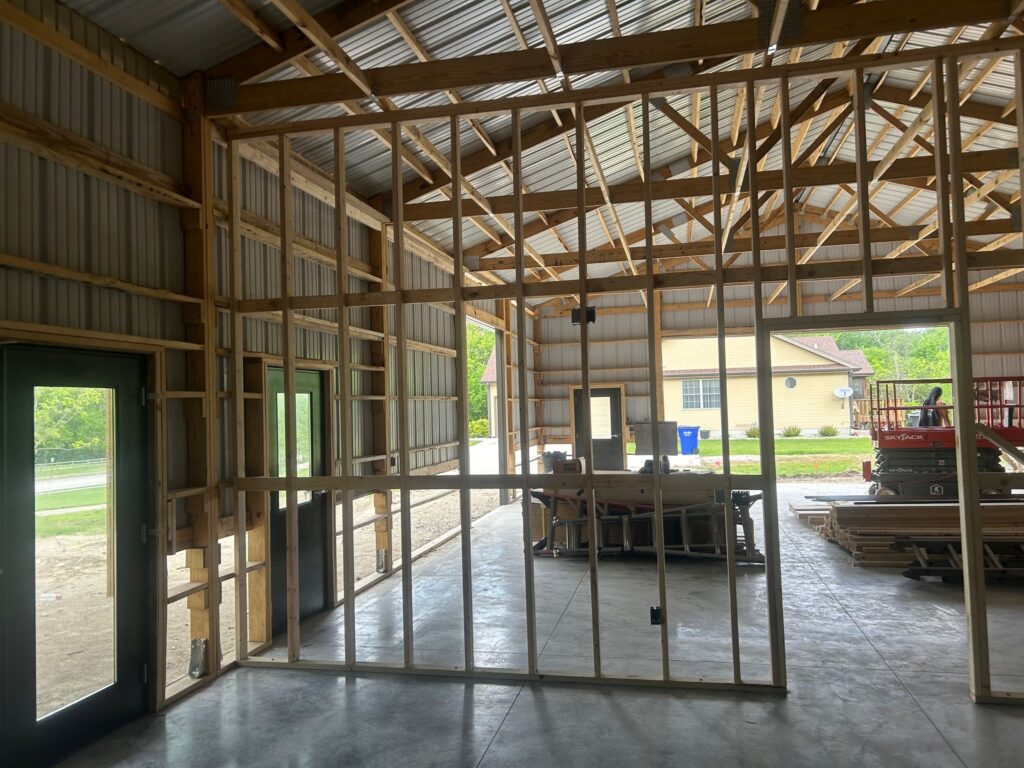
A post-frame hobby shop in Kansas is one of those projects that starts with a simple idea — a place to work on trucks, store the tractor, or finally have room to do woodworking — and becomes one of the most-used buildings on the property. Around Alta Vista, Wamego, and the Flint Hills, we see it happen all the time: someone builds a shop thinking it’ll be a weekend project space, and within a year it’s the heart of the farm.
Whether you’re in Wabaunsee County or out near Junction City, the right post-frame hobby shop doesn’t just give you square footage. It gives you a building that works with Kansas weather, fits your land, and holds its value for decades. Here’s what actually goes into designing one well.
Why Post-Frame Is the Right Choice for a Kansas Hobby Shop
Post-frame construction is the dominant method for hobby shops across central Kansas for good reason. The engineered columns bypass the frost line and carry the roof load directly — no continuous perimeter foundation needed. That keeps costs down and build times short while producing a structure that’s genuinely stout.
In Kansas, where straight-line winds can come out of the southwest with little warning, structural integrity matters. Post-frame buildings are engineered for wind load by design — a properly built shop in Riley or Geary County will outlast stick-frame in the same storm. The large open spans also mean no interior columns blocking equipment storage or work areas.
Size, Layout, and the Features That Actually Get Used
The most common starting point is somewhere in the 30×40 to 40×60 range. A 30×40 gives you enough room for two truck bays and a workbench wall, while a 40×60 opens up real flexibility for equipment storage or a dedicated clean workspace. If you’re in Morris or Wabaunsee County and farming alongside the hobby, it’s worth planning for that dual use from the start.
Overhead Doors: Think About What You Will Bring In
The most common regret we hear from shop owners is under-sizing the overhead doors. Before you settle on a door height, think through the tallest vehicle, implement, or trailer you will ever need to pull inside — combine heads, hay wagons, and enclosed trailers all have different clearance requirements. A door that feels plenty tall when you are planning the building can feel frustratingly tight once you are actually using the shop. It costs far less to size up during the build than to modify it later.
Concrete: Set the Foundation First
One thing that sets K-Construction apart: we typically pour the concrete before the building goes up. Getting the slab in first means the foundation is solid and cured before framing begins, and the site is properly established from the ground up. The slab thickness and reinforcement should match how you plan to use the space — light personal use has different requirements than heavy equipment and mechanical work. Getting that right from the start pays off every time you use the building.
Insulation and Climate Control
Kansas summers hit hard, and winters in the Flint Hills can be brutal. For a shop you will use year-round, insulating the walls and ceiling from the start saves real money compared to retrofitting later. Fiberglass batts in the walls work well in most applications. For the ceiling, blown-in insulation is our go-to choice — it fills the space completely, performs well across Kansas temperature swings, and holds up over time. A wood stove or propane unit heater can keep a well-insulated shop comfortable even when it is icing over near Council Grove or Emporia.
Practical Details That Make a Shop Actually Work
A lean-to addition on the south or east side gives you covered storage for implements or materials without consuming the main floor. A single walk door on each gable end means you are not swinging a large overhead door just to take the dog out. Vented ridge caps or cupolas pull heat out in the summer and reduce condensation in the winter — they are not just decorative.
Electrical should be planned in the design phase, not added as an afterthought. Heavy-duty service with dedicated circuits for welders, compressors, and power tools is standard for a working shop. LED shop lights are worth every penny — the quality of light you work under matters more than most people realize until they have tried it.
A Shop That Grows With You
Post-frame construction also makes additions straightforward — you can extend on the end walls without disturbing the original structure. Thinking through where a future lean-to or bay extension might go means your first phase does not close off options you will want later.
Out here in the Flint Hills, a well-built post-frame hobby shop tends to become part of the property’s identity — used across generations, built into the rhythms of farm and family life. That kind of staying power is what craftsmanship looks like when it meets Kansas ground.
Frequently Asked Questions
What size post-frame hobby shop do I need in Kansas?
Most Kansas hobby shop owners find that a 30×40 is the practical minimum for comfortable two-car or small equipment use, while 40×60 is ideal if you want real flexibility. Think about the longest vehicle or implement you will bring in and size the building — and especially the overhead doors — around that first.
How much does a post-frame hobby shop cost to build in Kansas?
Costs vary significantly based on size, finishes, insulation, concrete, and electrical work. The best way to understand what your project will cost is to get a site-specific quote from a local builder who knows your county’s permitting requirements and your land. General cost estimates found online rarely reflect the real conditions — soil, site prep, local labor, and finish level all move the number considerably.
Do I need a permit to build a hobby shop in Kansas?
Permit requirements vary by county. In most of the counties surrounding Alta Vista — including Wabaunsee, Morris, Riley, and Geary — agricultural outbuildings below a certain square footage may be exempt, but structures with electrical or plumbing typically require permits regardless of use. Your builder should be familiar with local requirements and can help confirm what applies to your parcel.
What’s the best insulation for a post-frame hobby shop in Kansas?
For most Kansas hobby shops, fiberglass batt insulation in the walls is a solid starting point. For the ceiling, blown-in insulation is the right call — it performs well in Kansas’s wide temperature swings, fills the space completely, and holds up over time. A vapor retarder on the warm-in-winter side of the wall assembly is also important to prevent long-term moisture damage given Kansas’s humidity swings.
How long does it take to build a post-frame hobby shop in Kansas?
Build timelines depend on a range of factors — project size, permitting, material lead times, site conditions, and time of year. Spring and summer are busy seasons across central Kansas, which can affect scheduling. The best approach is to have an honest conversation with your builder early in the planning process so you have a realistic picture of the timeline for your specific project and location.
Can I add living quarters to my post-frame hobby shop later?
Yes — post-frame construction is well-suited to adding a finished room, bunk area, or small apartment within a shop building. The open-span structure means interior framing can be added without compromising structural integrity. Planning for it from the start — running a separate electrical panel, roughing in a drain — makes the future conversion far simpler and less expensive than retrofitting everything later.