
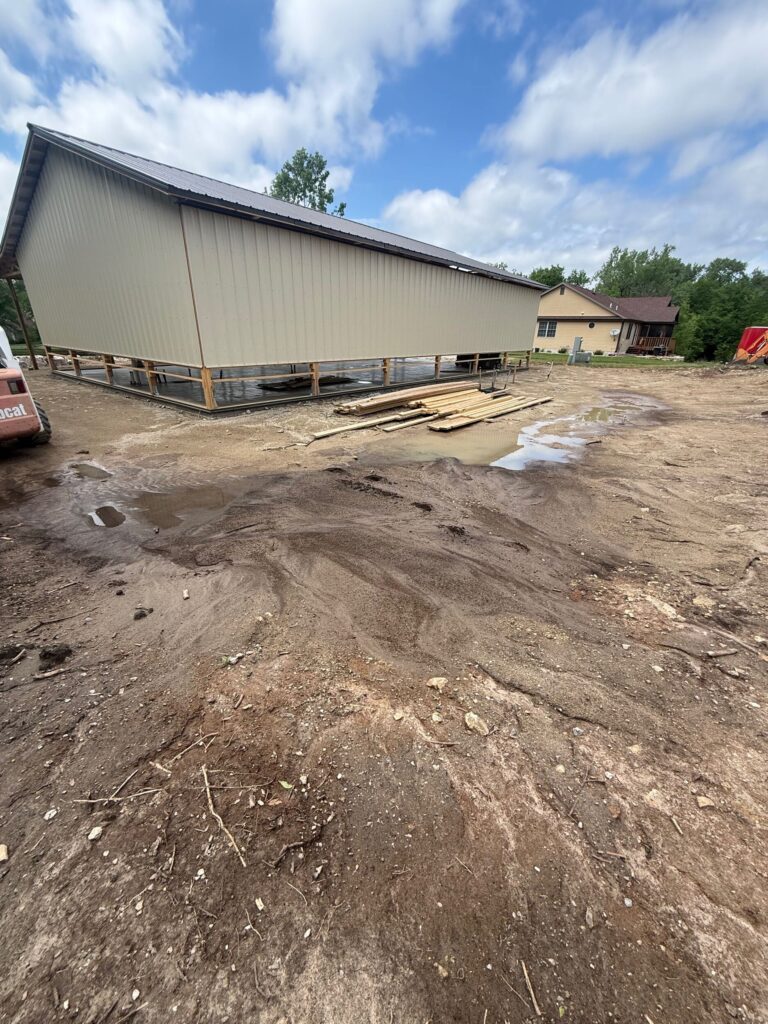
Walk into a pole barn on a humid August morning in Wabaunsee County, and you might find water beading on the underside of the roof panels like it just rained inside. That is condensation, and it is one of the most stubborn problems Kansas builders deal with. If you have ever wondered how to prevent condensation in a pole barn in Kansas, the short answer is that it takes more than a single product or a single trick. It takes thoughtful design, the right materials, and an honest understanding of how Kansas weather behaves through the year.
Why Condensation Happens in a Kansas Pole Barn
Condensation forms when warm, moist air meets a colder surface. In a Kansas barn, that surface is almost always the underside of the metal roof or a wall panel. From May through September, our humidity climbs into the seventies and eighties, sometimes higher right after a thunderstorm rolls across the Flint Hills. In winter, a heated shop floor warms the air inside while the metal skin of the building stays close to outside temperature. The dew point gets crossed, and moisture starts dripping or freezing on the inside of the roof.
The Three Big Sources
Three sources drive most of the moisture: humid outdoor air leaking in through gaps, water vapor rising up out of a fresh concrete slab, and water vapor produced inside the building from livestock, vehicles, propane heaters, and even people. All three are common in barns from Council Grove out to Junction City and beyond.
Practical Steps to Stop the Drip
Start at the Slab
A vapor barrier under the concrete is one of the cheapest, most effective things you will ever install. A 10- to 15-mil polyethylene sheet placed over compacted gravel keeps ground moisture from migrating up through the slab and saturating the air inside.
Insulate the Roof Underside
Bare metal roofing is a condensation magnet. The most reliable fixes are a factory-applied membrane bonded to the underside of the panels, often called a drip stop, or open- or closed-cell spray foam applied after construction. Fiberglass batts paired with a sealed vapor retarder also work, but they are unforgiving if installed loose or compressed. In a humid Kansas summer, gaps in your insulation will tell on themselves quickly.
Ventilate, Do Not Just Seal
A tightly sealed barn with no airflow will trap moisture instead of releasing it. Eave intake vents paired with a ridge vent let warm, moist air rise out the top while drier air enters down low. For a horse barn near Wamego or a machine shed outside Emporia, this passive airflow can carry away gallons of vapor over the course of a day.
Kansas-Specific Things Worth Considering
Post-frame buildings give us some natural advantages here. The wide column spacing leaves room for thick insulation and unobstructed airflow between bays, which is harder to achieve in stick-frame construction. We also pay attention to the sealing details around overhead doors and walk doors. Wabaunsee, Morris, Riley, and Geary counties all see swings of forty degrees within a single day, and those temperature changes pull air in and out around poorly gasketed doors. Building tall enough to keep stored hay or equipment off the slab also reduces the moisture load on the air.
Built to Last in the Flint Hills
A pole barn that handles Kansas weather without dripping water on its contents is not built by accident. It is the result of careful planning, the right vapor barriers, well-designed ventilation, and insulation that matches how the space will be used. When we think about how to prevent condensation in a pole barn in Kansas, we are really thinking about how to make a building that protects what your family worked hard to build, whether that is livestock, equipment, or a livelihood. Done well, the structure stands quiet through every season, and you forget you ever worried about it.
Frequently Asked Questions
Why does my pole barn ceiling drip in the summer?
That dripping is condensation. Warm, humid Kansas air hits the cooler underside of your metal roof, and moisture comes out of the air and lands on whatever is below. Adding a drip stop membrane or insulation to the underside of the panels usually solves it.
Can spray foam stop condensation in a pole barn?
Yes, closed-cell spray foam is one of the most effective products because it acts as both insulation and a vapor barrier. It seals small gaps that batt insulation tends to miss, which is helpful in a humid climate like Kansas. It does cost more than fiberglass, but in a building that sees a lot of temperature swings, the long-term performance is hard to beat.
Is a vapor barrier under the concrete really necessary?
For a heated or insulated building, yes. Without one, moisture from the soil moves up through the slab year-round and adds to the humidity inside. It is far cheaper to put down 10-mil poly during the build than to chase moisture problems later.
How do I prevent condensation in a pole barn used for livestock?
Animals add a lot of moisture to the air. Combine ridge and eave ventilation with insulation on the roof, and keep an eye on stocking density. For a horse barn in the Flint Hills, passive airflow is usually enough if it was sized right at the design stage.
Do post-frame buildings condensate more than stick-frame buildings?
Not inherently. Both can have problems if the details are missed. Post-frame buildings actually offer more space for thick insulation between widely spaced columns, which can help when builders use that space well.
What time of year is condensation worst in Kansas?
Late spring and early summer mornings are the worst, because warm humid air arrives before the building has warmed up. Winter mornings in heated shops are a close second, when warm interior air meets cold metal panels.