
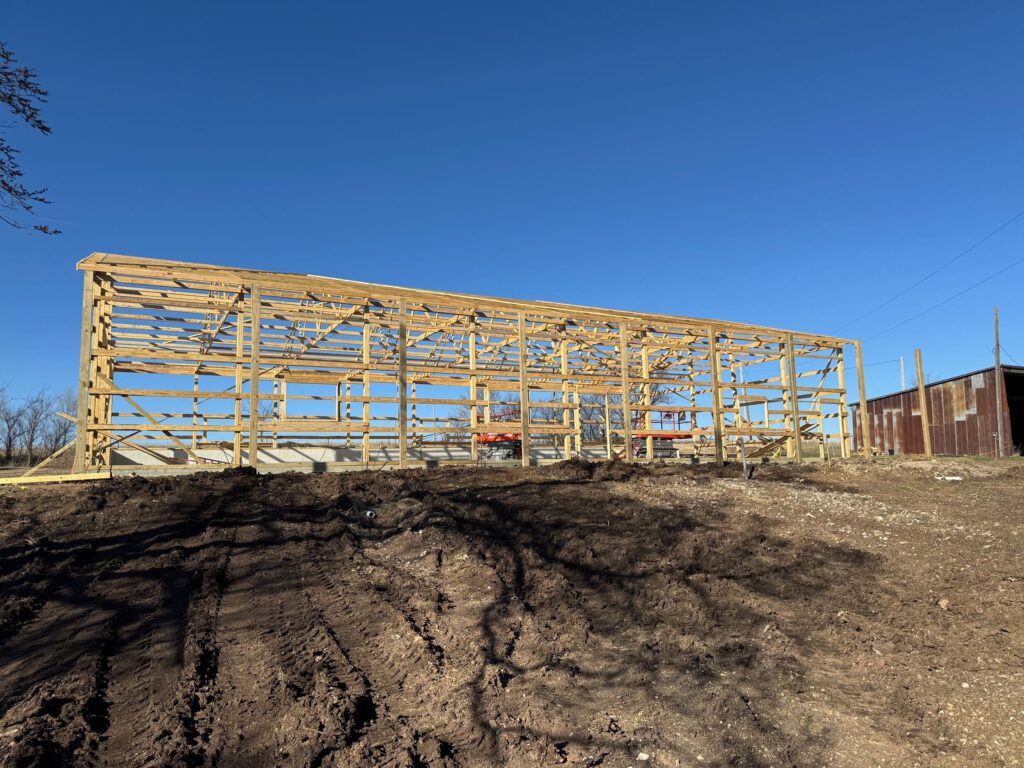
Planning a shop building is a major investment, and the most common shop building mistakes we see in Kansas don’t happen during construction—they happen during planning.
Across the Flint Hills and surrounding communities, these early decisions often determine how well a building performs long-term.
Underestimating Shop Building Size
One of the most common mistakes is building too small.
A building may meet current needs but quickly become limiting as operations grow.
Poor Shop Building Layout and Workflow Planning
A shop isn’t just storage—it’s a working space.
Without a clear layout:
- Movement becomes inefficient
- Work zones overlap
- Productivity decreases
Door Placement Mistakes That Limit Access
Door size and placement directly affect usability.
Improper planning can limit:
- Equipment access
- Workflow efficiency
- Daily convenience
Ignoring Site Prep and Drainage
Site conditions are often overlooked during planning.
Poor preparation can lead to long-term issues that affect the building’s performance.
Designing a Building Only for Today’s Needs
Buildings designed only for current use often become outdated quickly.
Planning for future needs helps avoid costly changes later.
Final Thoughts
Avoiding common shop building mistakes comes down to planning for function, not just structure—especially when the building is meant to support long-term use.
Frequently Asked Questions
What is the most common shop building mistake?
Underestimating size and not planning for future needs.
Why is layout important in a shop building?
Layout directly affects efficiency, movement, and usability.
How important is door placement?
It plays a major role in access and day-to-day function.
Can mistakes be fixed later?
Some can, but many are costly or difficult to correct.
Should I plan for future expansion?
Yes. Planning ahead is more efficient than modifying later.