
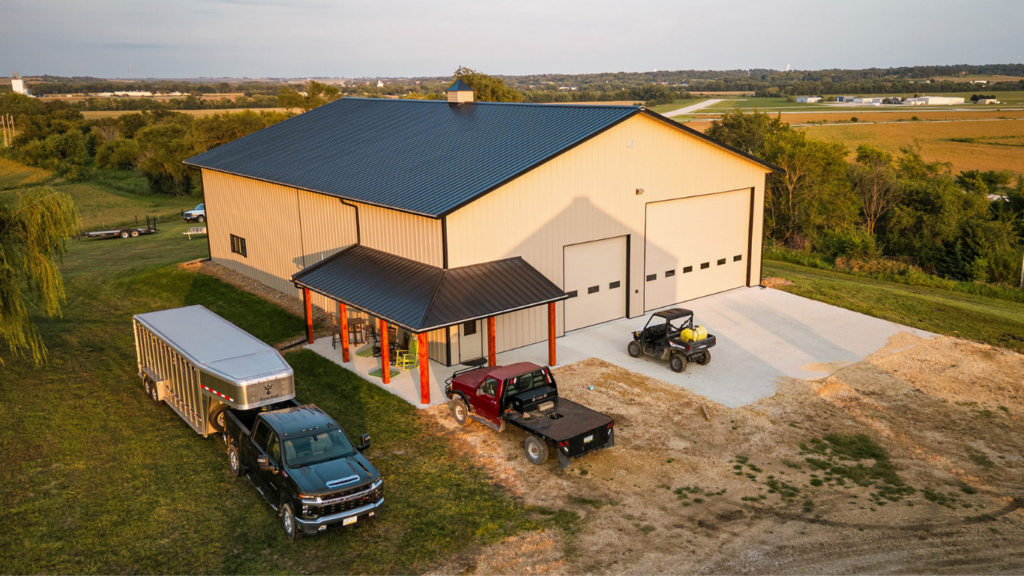
Proper site prep for a pole barn is one of the most important steps in any post-frame project, especially in Kansas where soil, drainage, and weather conditions vary across areas like Council Grove, Wamego, and Alta Vista.
Most long-term building issues can be traced back to site conditions—not the structure itself. Getting this phase right sets the foundation for everything that follows.
What Site Prep for a Pole Barn Includes
Site prep involves more than just clearing ground.
It typically includes:
- Grading and leveling
- Establishing proper elevation
- Preparing a stable building pad
- Planning drainage paths
Each step ensures the building has a solid, stable base.
Why Drainage Matters in Kansas Soil Conditions
Kansas weather brings heavy rain, snowmelt, and seasonal changes.
Without proper drainage:
- Water can collect around the building
- Soil can shift or settle
- Moisture can impact usability
Managing water flow is critical to long-term performance.
How Soil and Compaction Affect Building Performance
Soil conditions vary widely across the region.
Important factors include:
- Soil type
- Compaction levels
- Fill material
These directly affect how the building and slab perform over time.
Planning Access and Layout Before Construction
Site prep should also account for how the building will be used.
Consider:
- Equipment access
- Driveways and entrances
- Traffic flow
These decisions impact daily functionality.
Common Site Prep Mistakes That Cause Long-Term Issues
Some of the most common issues include:
- Inadequate drainage planning
- Poor compaction
- Incorrect elevation
These are often difficult and costly to fix after construction.
Final Thoughts
Taking the time to properly plan site prep for a pole barn ensures the building performs the way it should—not just at completion, but for years to come.
Frequently Asked Questions
What does site prep for a pole barn include?
It includes grading, drainage planning, soil preparation, and establishing a stable building pad.
Why is drainage important for a pole barn?
Proper drainage prevents water buildup, which can lead to structural and usability issues.
Does every site require the same preparation?
No. Soil and terrain vary, so each site should be evaluated individually.
Can poor site prep cause long-term problems?
Yes. Many building issues originate from improper site preparation.
How do I know if my site is ready to build?
A proper evaluation of grade, drainage, and soil conditions is required.