
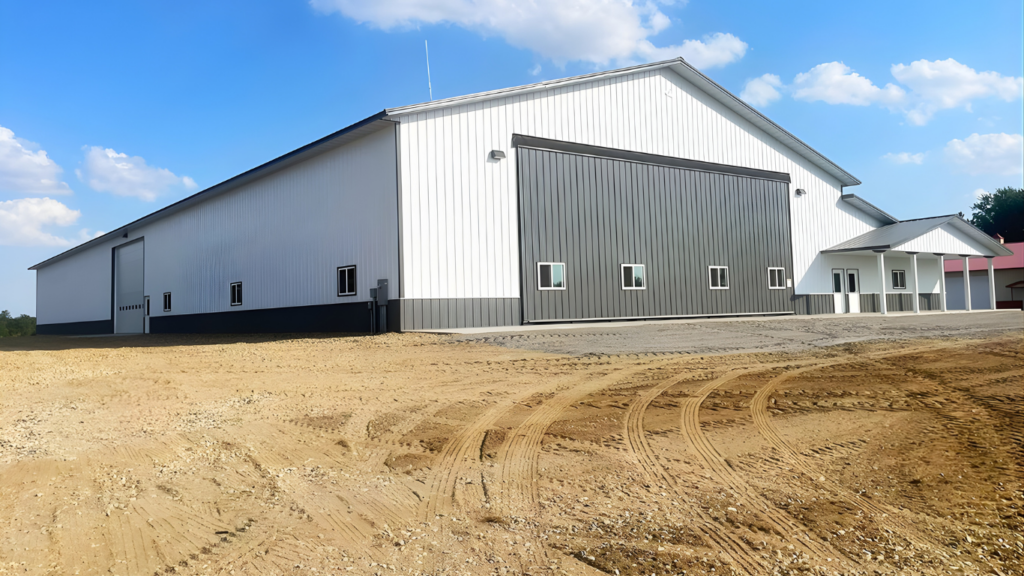
If you’re planning a shop building in Kansas, one of the first questions is how big it needs to be—but the better question is how the building will actually function over time.
Across Alta Vista, Manhattan, and the Flint Hills, we’ve seen that determining how big a shop building should be comes down to equipment, workflow, and long-term use—not just square footage. On larger builds, this decision has a direct impact on how well the building performs for years to come.
How Big Should a Shop Building Be for Your Equipment and Workflow
The right size starts with how the building will be used day to day.
That includes:
- Equipment width, height, and clearance
- Turning radius and maneuverability
- Storage versus active workspace
- Entry and exit flow
A building that technically “fits everything” can still create inefficiencies if movement and workflow aren’t planned properly.
Why Building Height Impacts Long-Term Flexibility
Height is one of the most overlooked factors in shop design.
Clear height affects:
- Door size and access
- Equipment clearance
- Future adaptability
On many projects, adding a few feet of height upfront prevents limitations that are expensive or impossible to fix later.
Planning a Shop Building for Future Growth
Most operations don’t stay the same. Equipment gets larger, storage needs increase, and workflows evolve.
Designing only for today is one of the fastest ways to outgrow a building. Planning for future use helps ensure the building continues to serve its purpose long-term.
How Layout Affects Efficiency in a Post-Frame Building
Layout plays a major role in how the building actually functions.
Consider:
- Door placement
- Work zones
- Storage areas
- Access points
A well-planned layout reduces wasted movement and improves day-to-day efficiency.
Kansas Site Conditions and Building Orientation
In areas like the Flint Hills, site conditions can influence how a building should be positioned and sized.
Factors like wind exposure, terrain, and access all play a role in long-term usability.
Final Thoughts
If you’re trying to determine how big a shop building should be, the goal isn’t just fitting what you have today—it’s building something that continues to work as your operation grows and changes over time.
Frequently Asked Questions
How big should a shop building be?
It should be based on your equipment, workflow, and future needs. Most buildings that feel “big enough” initially become limiting without proper planning.
Is it better to build bigger than I need?
In many cases, yes. Planning for growth is typically more efficient than expanding later.
What height should a shop building be?
Height depends on equipment and door requirements, but additional clearance often improves long-term flexibility.
Can a post-frame building be expanded later?
Yes, but expansion requires planning and is usually less efficient than building to the right size upfront.
Does layout matter as much as size?
Absolutely. A poor layout can limit efficiency even in a large building.